• Rococo-Revival Armchair, White House Collection
    Unknown
    seats
    furniture
    furnishings
    White House Collection
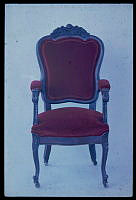
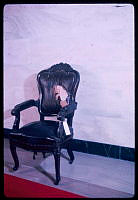
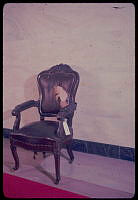
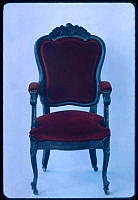
    This Rococo-Revival armchair was taken by George F. Mobley in 1962. It is similar to the one in G. P. A. Healy's famous portrait of President Abraham Lincoln. The chair was found in storage and reupholstered in wine-red velvet that was popular in the Victorian era. White House Curator Lorraine Waxman Pearce was most likely responsible for researching and arranging for the chair's restoration. This photograph is part of the Lorraine Waxman Pearce Collection. Lorraine Waxman Pearce served as the first White House Curator from 1961 to 1962. As curator, she oversaw refurbishment projects, implemented collections policies, and collaborated with First Lady Jacqueline Kennedy to write the first White House guidebook—a joint publication of the National Geographic Society and the White House Historical Association. Since its original publication in 1962, “The White House: An Historic Guide” has been revised, updated, and printed for over 60 years.
  • Rococo-Revival Armchair, White House Collection
    Abbie Rowe
    White House Collection
    furnishings
    furniture
    seats
    This photograph of a Rococo-Revival armchair was taken by Abbie Rowe at the White House circa 1961 to 62. It is similar to the one in G. P. A. Healy's famous portrait of President Abraham Lincoln. The chair was found in storage and later reupholstered in wine-red velvet that was popular in the Victorian era. White House Curator Lorraine Waxman Pearce was most likely responsible for researching and arranging for the chair's restoration. This photograph is part of the Lorraine Waxman Pearce Collection. Lorraine Waxman Pearce served as the first White House Curator from 1961 to 1962. As curator, she oversaw refurbishment projects, implemented collections policies, and collaborated with First Lady Jacqueline Kennedy to write the first White House guidebook—a joint publication of the National Geographic Society and the White House Historical Association. Since its original publication in 1962, “The White House: An Historic Guide” has been revised, updated, and printed for over 60 years.
  • Bellangé Side Chair in the Blue Room, White House Collection
    George F. Mobley
    Blue Room
    State Floor
    furnishings
    furniture
    seats
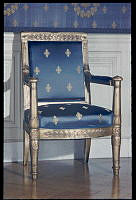
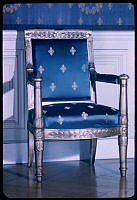
    This photograph of a side chair by Pierre-Antoine Bellangé in the Blue Room was taken in March 1962 by George F. Mobley. For First Lady Jacqueline Kennedy's restoration of the White House, the Blue Room was restored to the period of the James Monroe presidency. The chair had been returned to the White House Collection as a gift for that restoration project. In 1817, President Monroe imported a suite of gilded beechwood furniture by the noted Parisian cabinetmaker, Pierre-Antoine Bellangé, as well as a table plateau, vases, clocks, tables, gold centerpieces, and candelabrum to create a splendid setting for social events. The Blue Room is located on the State Floor of the Executive Mansion. The oval parlor has been known as the Blue Room since Martin Van Buren’s 1837 redecoration. The room is often used for receptions, photo opportunities, and during the holiday season is home to the official White House Christmas Tree. This photograph is part of the Lorraine Waxman Pearce Collection. Lorraine Waxman Pearce served as the first White House Curator from 1961 to 1962. As curator, she oversaw refurbishment projects, implemented collections policies, and collaborated with First Lady Jacqueline Kennedy to write the first White House guidebook—a joint publication of the National Geographic Society and the White House Historical Association. Since its original publication in 1962, “The White House: An Historic Guide” has been revised, updated, and printed for over 60 years.
  • Mahogany Empire Sofa, White House Collection
    Unknown
    White House Collection
    furnishings
    furniture
    seats
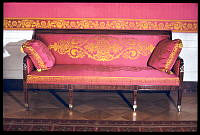
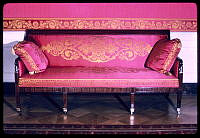
    This mahogany sofa was crafted in the Empire style with bronze sphinx heads decorating the corners under the arm supports. The sofa is believed to have belonged to First Lady Dolley Madison. This photograph captures the sofa as it appeared in the Red Room, during the John F. Kennedy administration. The silk upholstery was the same as the wall coverings at the time. This photograph is part of the Lorraine Waxman Pearce Collection. Lorraine Waxman Pearce served as the first White House Curator from 1961 to 1962. As curator, she oversaw refurbishment projects, implemented collections policies, and collaborated with First Lady Jacqueline Kennedy to write the first White House guidebook—a joint publication of the National Geographic Society and the White House Historical Association. Since its original publication in 1962, “The White House: An Historic Guide” has been revised, updated, and printed for over 60 years.
  • Rococo-Revival Armchair, White House Collection
    Abbie Rowe
    seats
    furniture
    furnishings
    White House Collection
    This photograph of a Rococo-Revival armchair was taken by Abbie Rowe at the White House circa 1961 to 1962. It is similar to the one in G. P. A. Healy's famous portrait of President Abraham Lincoln. The chair was found in storage and later reupholstered in wine-red velvet that was popular in the Victorian era. White House Curator Lorraine Waxman Pearce was most likely responsible for researching and arranging for the chair's restoration. This photograph is part of the Lorraine Waxman Pearce Collection. Lorraine Waxman Pearce served as the first White House Curator from 1961 to 1962. As curator, she oversaw refurbishment projects, implemented collections policies, and collaborated with First Lady Jacqueline Kennedy to write the first White House guidebook—a joint publication of the National Geographic Society and the White House Historical Association. Since its original publication in 1962, “The White House: An Historic Guide” has been revised, updated, and printed for over 60 years.
  • White Garden Bench, White House Collection
    Unknown
    White House Collection
    furnishings
    furniture
    seats
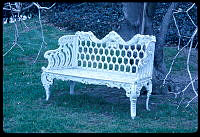
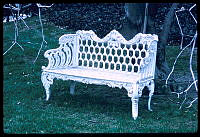
    This white, cast-iron bench is of the Rococo Revival style during the Victorian era and may have been purchased during the Millard Fillmore administration. Bates Littlehales photographed the bench on the White House Grounds in March 1962. This photograph is part of the Lorraine Waxman Pearce Collection. Lorraine Waxman Pearce served as the first White House Curator from 1961 to 1962. As curator, she oversaw refurbishment projects, implemented collections policies, and collaborated with First Lady Jacqueline Kennedy to write the first White House guidebook—a joint publication of the National Geographic Society and the White House Historical Association. Since its original publication in 1962, “The White House: An Historic Guide” has been revised, updated, and printed for over 60 years.
  • Rococo-Revival Armchair, White House Collection
    Unknown
    seats
    furniture
    furnishings
    White House Collection
    This Rococo-Revival armchair was taken by George F. Mobley in 1962. It is similar to the one in G. P. A. Healy's famous portrait of President Abraham Lincoln. The chair was found in storage and reupholstered in wine-red velvet that was popular in the Victorian era. White House Curator Lorraine Waxman Pearce was most likely responsible for researching and arranging for the chair's restoration. This photograph is part of the Lorraine Waxman Pearce Collection. Lorraine Waxman Pearce served as the first White House Curator from 1961 to 1962. As curator, she oversaw refurbishment projects, implemented collections policies, and collaborated with First Lady Jacqueline Kennedy to write the first White House guidebook—a joint publication of the National Geographic Society and the White House Historical Association. Since its original publication in 1962, “The White House: An Historic Guide” has been revised, updated, and printed for over 60 years.
  • White Garden Bench, White House Collection
    Unknown
    White House Collection
    furnishings
    furniture
    seats
    This white, cast-iron bench is of the Rococo Revival style during the Victorian era and may have been purchased during the Millard Fillmore administration. Bates Littlehales photographed the bench on the White House Grounds in March 1962. This photograph is part of the Lorraine Waxman Pearce Collection. Lorraine Waxman Pearce served as the first White House Curator from 1961 to 1962. As curator, she oversaw refurbishment projects, implemented collections policies, and collaborated with First Lady Jacqueline Kennedy to write the first White House guidebook—a joint publication of the National Geographic Society and the White House Historical Association. Since its original publication in 1962, “The White House: An Historic Guide” has been revised, updated, and printed for over 60 years.
  • Bellangé Side Chair in the Blue Room, White House Collection
    George F. Mobley
    seats
    Blue Room
    State Floor
    furnishings
    furniture
    This photograph of a side chair by Pierre-Antoine Bellangé in the Blue Room was taken in March 1962 by George F. Mobley. For First Lady Jacqueline Kennedy's restoration of the White House, the Blue Room was restored to the period of the James Monroe presidency. The chair had been returned to the White House Collection as a gift for that restoration project. In 1817, President Monroe imported a suite of gilded beechwood furniture by the noted Parisian cabinetmaker, Pierre-Antoine Bellangé, as well as a table plateau, vases, clocks, tables, gold centerpieces, and candelabrum to create a splendid setting for social events. The Blue Room is located on the State Floor of the Executive Mansion. The oval parlor has been known as the Blue Room since Martin Van Buren’s 1837 redecoration. The room is often used for receptions, photo opportunities, and during the holiday season is home to the official White House Christmas Tree. This photograph is part of the Lorraine Waxman Pearce Collection. Lorraine Waxman Pearce served as the first White House Curator from 1961 to 1962. As curator, she oversaw refurbishment projects, implemented collections policies, and collaborated with First Lady Jacqueline Kennedy to write the first White House guidebook—a joint publication of the National Geographic Society and the White House Historical Association. Since its original publication in 1962, “The White House: An Historic Guide” has been revised, updated, and printed for over 60 years.
  • Mahogany Empire Sofa, White House Collection
    Unknown
    White House Collection
    furnishings
    furniture
    seats
    This mahogany sofa was crafted in the Empire style with bronze sphinx heads decorating the corners under the arm supports. The sofa is believed to have belonged to First Lady Dolley Madison. This photograph captures the sofa as it appeared in the Red Room, during the John F. Kennedy administration. The silk upholstery was the same as the wall coverings at the time. This photograph is part of the Lorraine Waxman Pearce Collection. Lorraine Waxman Pearce served as the first White House Curator from 1961 to 1962. As curator, she oversaw refurbishment projects, implemented collections policies, and collaborated with First Lady Jacqueline Kennedy to write the first White House guidebook—a joint publication of the National Geographic Society and the White House Historical Association. Since its original publication in 1962, “The White House: An Historic Guide” has been revised, updated, and printed for over 60 years.
  • Bergère (Enclosed Armchair), White House Collection
    Pierre-Antoine Bellange
    seats
    furniture
    furnishings
    State Floor
    Blue Room
    White House Collection
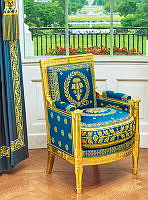
    This bergère by Pierre-Antoine Bellangé of Paris is part of a 53-piece gilded beechwood suite ordered for the Oval Room (later called the Blue Room) by President James Monroe in 1817. A bergère is an armchair with upholstered and enclosed sides. The bergère is one of two made for the president and first lady. The bergère was photographed by Bruce White in the Blue Room of the White House.
  • Armchair, White House Collection
    A. H. Davenport
    seats
    furniture
    furnishings
    White House Collection
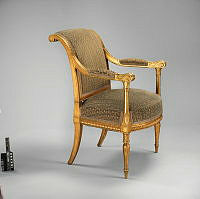
    This scrolled-back armchair was created by A. H. Davenport in 1902 during the Theodore Roosevelt administration. The armchair is one of six chairs ordered for the Green Room of the White House. The seats and backs were upholstered in tapestry fabric, making them the most expensive type of armchairs in the Green Room. The chairs were originally painted white but were later gilded in the 1930s.
  • Bellange Chair, White House Collection
    Pierre-Antoine Bellange
    White House Collection
    seats
    furnishings
    furniture
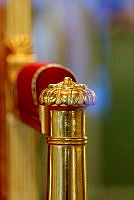
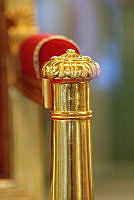
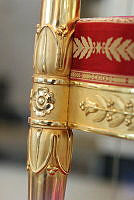
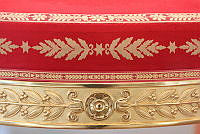
    This gilded beechwood armchair is part of the 53-piece suite of Pierre-Antoine Bellange furniture that future president James Monroe purchased while serving as United States minister to France and later brought with him to the White House. Many pieces remain in the White House Collection. This particular chair is upholstered in fabric inspired by the chair's original crimson upholstery.
  • Bellange Chair, White House Collection
    Pierre-Antoine Bellange
    seats
    White House Collection
    furnishings
    furniture
    This gilded beechwood armchair is part of the 53-piece suite of Pierre-Antoine Bellange furniture that future president James Monroe purchased while serving as United States minister to France and later brought with him to the White House. Many pieces remain in the White House Collection. This particular chair is upholstered in fabric inspired by the chair's original crimson upholstery.
  • Mahogany Sofa, White House Collection
    Unknown
    White House Collection
    seats
    furnishings
    furniture
    This mahogany sofa with satinwood and covered in silk was originally owned by Daniel Webster.
  • Conservation of a Bellangé Chair, White House Collection
    Pierre-Antoine Bellange
    White House Collection
    seats
    furniture
    furnishings
    This photograph taken during the Clinton Administration shows conservation work being done on one of Pierre-Antoine Bellangé's chairs made for the Blue Room. President James Monroe purchased 53 pieces of furniture for the White House from Bellangé in Paris in 1817.
  • Armchair, Monroe Administration East Room, White House Collection
    William King Jr.
    seats
    White House Collection
    furniture
    furnishings
    This armchair by William King, Jr. of Georgetown was one of 24 that President James Monroe bought for the East Room. This suite may have been inspired by French furniture placed in the Oval Room in 1817.
  • Red Room Herter Brothers Armchair (Detail), White House Collection
    Herter Brothers
    White House Collection
    seats
    furniture
    furnishings
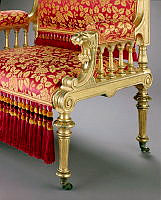
    This is a detail photograph of the Herter Brothers chair First Lady Julia Grant purchased for the Red Room. This is the surviving half of a pair of gilded lady's chairs made by Herter Brothers. The arm rests terminate in carved lion's heads, a motif that appears in other Herter pieces, 11 of which were also made for the Red Room. In 1873-1875, the Grants supervised a major redecoration of the White House in preparation for their daughter Nellie’s wedding to Englishman Algernon Sartoris. Throughout the staterooms, Herter Brothers, a renowned New York furniture maker, supplied sophisticated furnishings.
  • Mahogany Side Chair, White House Collection
    Thomas Burling
    White House Collection
    furniture
    furnishings
    seats
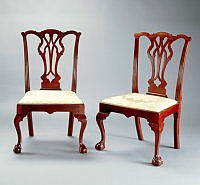
    This side chair by Thomas Burling of New York may be from a group of mahogany chairs purchased in 1789 for President George Washington. Burling supplied the household furniture for the first presidential residence. Gift of the Barra Foundation, 1994.
  • Rosewood, Brass, and Hardwood Armchair and Side Chair, White House Collection
    Unknown
    White House Collection
    seats
    furniture
    furnishings
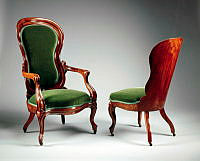
    This armchair and side chair are among a set made of rosewood, brass, and hardwood that were purchased in 1861 for the guest bedroom. These pieces are attributed to the New York cabinetmaker John Henry Belter.

  • French Armchair, White House Collection
    Unknown
    White House Collection
    seats
    furniture
    furnishings
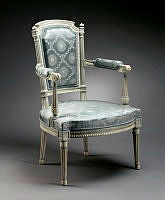
    The provenance of this painted beechwood armchair includes possible ownership by First Lady Dolley Madison. Bruce White is credited for taking the photograph of this armchair in 2000.
  • Armchair and Side Chair, White House Collection
    L. Marcotte & Co.
    furnishings
    seats
    furniture
    White House Collection
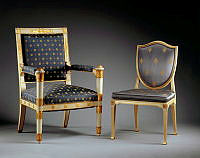
    This gilded cherry armchair and painted birch side chair were copied from a French Empire suite in the Chateau de Compiegne outside Paris. They were commissioned from L. Marcotte and Co. of New York, a decorating firm that executed all of the interior decoration of the Blue Room in 1902.
  • Side Chair Attributed to Duncan Phyfe, White House Collection
    Duncan Phyfe
    White House Collection
    seats
    furnishings
    furniture
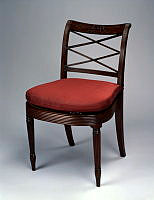
    This armchair is attributed to Duncan Phyfe of New York. Phyfe was born in Scotland and emigrated to New York in 1784. He became one of the premiere cabinet makers in the United States during the first half of the 19th century, known for blending the previous English Neoclassical and Regency styles together in a distinctive way. Phyfe benefited from his location in New York City on Fulton Street, where he was able to ship his furniture out to the southern States and the rich cotton magnates there, as well as to international ports.