• Lorraine Waxman Pearce Collection Compilation
    White House Historical Association
    vases
    staff
    restoration
    construction & maintence
    china
    White House Collection
    WHHA
    State Floor
    State Dining Room
    Roosevelt Room
    Blue Room
    Map Room
    Ground Floor
    Residence staff
    documents
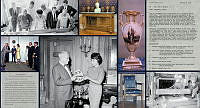
    This composite is a compilation of materials from the Lorraine Waxman Pearce Collection and other sources. Lorraine Waxman Pearce served as the first White House Curator from 1961 to 1962. This composite may only be used for press and publicity purposes related to the collection. All other uses must be approved by the White House Historical Association in writing.
  • Rococo-Revival Armchair, White House Collection
    Unknown
    seats
    furniture
    furnishings
    White House Collection
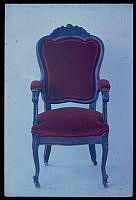
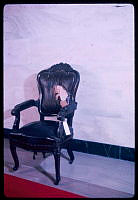
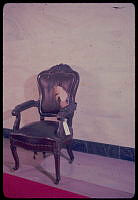
    This Rococo-Revival armchair was taken by George F. Mobley in 1962. It is similar to the one in G. P. A. Healy's famous portrait of President Abraham Lincoln. The chair was found in storage and reupholstered in wine-red velvet that was popular in the Victorian era. White House Curator Lorraine Waxman Pearce was most likely responsible for researching and arranging for the chair's restoration. This photograph is part of the Lorraine Waxman Pearce Collection. Lorraine Waxman Pearce served as the first White House Curator from 1961 to 1962. As curator, she oversaw refurbishment projects, implemented collections policies, and collaborated with First Lady Jacqueline Kennedy to write the first White House guidebook—a joint publication of the National Geographic Society and the White House Historical Association. Since its original publication in 1962, “The White House: An Historic Guide” has been revised, updated, and printed for over 60 years.

  • Rococo-Revival Armchair, White House Collection
    Abbie Rowe
    White House Collection
    furnishings
    furniture
    seats
    This photograph of a Rococo-Revival armchair was taken by Abbie Rowe at the White House circa 1961 to 62. It is similar to the one in G. P. A. Healy's famous portrait of President Abraham Lincoln. The chair was found in storage and later reupholstered in wine-red velvet that was popular in the Victorian era. White House Curator Lorraine Waxman Pearce was most likely responsible for researching and arranging for the chair's restoration. This photograph is part of the Lorraine Waxman Pearce Collection. Lorraine Waxman Pearce served as the first White House Curator from 1961 to 1962. As curator, she oversaw refurbishment projects, implemented collections policies, and collaborated with First Lady Jacqueline Kennedy to write the first White House guidebook—a joint publication of the National Geographic Society and the White House Historical Association. Since its original publication in 1962, “The White House: An Historic Guide” has been revised, updated, and printed for over 60 years.
  • Vase Detail, White House Collection
    Pierre-Louis Dagoty
    White House Collection
    furnishings
    vases
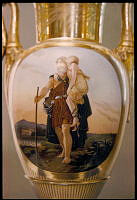
    This close up of a vase, attributed to Pierre-Louis Dagoty of Paris, was purchased for the Red Room. It shows a landscape with Byzantine general Belisarius. The swans on the handles are often seen on French Empire objects. This firm also produced a dinner and dessert service for the President's House in 1817. The vase had been in storage until it was identified by White House Curator Lorraine Waxman Pearce as an item from the James Monroe presidency. This photograph is part of the Lorraine Waxman Pearce Collection. Lorraine Waxman Pearce served as the first White House Curator from 1961 to 1962. As curator, she oversaw refurbishment projects, implemented collections policies, and collaborated with First Lady Jacqueline Kennedy to write the first White House guidebook—a joint publication of the National Geographic Society and the White House Historical Association. Since its original publication in 1962, “The White House: An Historic Guide” has been revised, updated, and printed for over 60 years.
  • Monroe Silver Flatware, White House Collection
    Unknown
    White House Collection
    flatware
    silver
    tableware
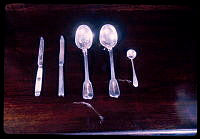
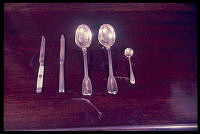
    This photograph is of silver flatware acquired for the White House during President James Monroe's administration, from 1817 to 1825. It was taken by an unknown photographer circa 1962. The knives bear an engraving that reads "President's House." White House Curator Lorriane Waxman Pearce recognized the flatware, which had previously been in storage. This photograph is part of the Lorraine Waxman Pearce Collection. Lorraine Waxman Pearce served as the first White House Curator from 1961 to 1962. As curator, she oversaw refurbishment projects, implemented collections policies, and collaborated with First Lady Jacqueline Kennedy to write the first White House guidebook—a joint publication of the National Geographic Society and the White House Historical Association. Since its original publication in 1962, “The White House: An Historic Guide” has been revised, updated, and printed for over 60 years.
  • Mahogany Empire Sofa, White House Collection
    Unknown
    White House Collection
    furnishings
    furniture
    seats
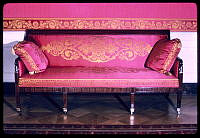
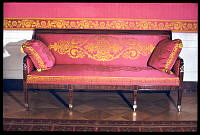
    This mahogany sofa was crafted in the Empire style with bronze sphinx heads decorating the corners under the arm supports. The sofa is believed to have belonged to First Lady Dolley Madison. This photograph captures the sofa as it appeared in the Red Room, during the John F. Kennedy administration. The silk upholstery was the same as the wall coverings at the time. This photograph is part of the Lorraine Waxman Pearce Collection. Lorraine Waxman Pearce served as the first White House Curator from 1961 to 1962. As curator, she oversaw refurbishment projects, implemented collections policies, and collaborated with First Lady Jacqueline Kennedy to write the first White House guidebook—a joint publication of the National Geographic Society and the White House Historical Association. Since its original publication in 1962, “The White House: An Historic Guide” has been revised, updated, and printed for over 60 years.
  • Mahogany Card Table, White House Collection
    Abbie Rowe
    tables
    furniture
    furnishings
    White House Collection
    Green Room
    State Floor
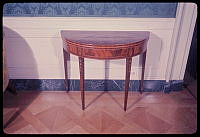
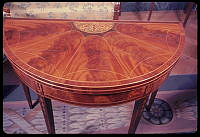
    This photograph of a mahogany card table was taken by Abbie Rowe during the John F. Kennedy administration. The table was crafted in the Federal style and was likely constructed in Baltimore, Maryland in the early 19th century. It features matched veneers with a bellflower and cockleshell inlay. During the Kennedy administration, card table resided in the Green Room. This photograph is part of the Lorraine Waxman Pearce Collection. Lorraine Waxman Pearce served as the first White House Curator from 1961 to 1962. As curator, she oversaw refurbishment projects, implemented collections policies, and collaborated with First Lady Jacqueline Kennedy to write the first White House guidebook—a joint publication of the National Geographic Society and the White House Historical Association. Since its original publication in 1962, “The White House: An Historic Guide” has been revised, updated, and printed for over 60 years.
  • Mahogany Card Table, White House Collection
    Abbie Rowe
    tables
    furniture
    furnishings
    White House Collection
    Green Room
    State Floor
    This photograph of a mahogany card table was taken by Abbie Rowe during the John F. Kennedy administration. The table was crafted in the Federal style and was likely constructed in Baltimore, Maryland in the early 19th century. It features matched veneers with a bellflower and cockleshell inlay. During the Kennedy administration, card table resided in the Green Room. This photograph is part of the Lorraine Waxman Pearce Collection. Lorraine Waxman Pearce served as the first White House Curator from 1961 to 1962. As curator, she oversaw refurbishment projects, implemented collections policies, and collaborated with First Lady Jacqueline Kennedy to write the first White House guidebook—a joint publication of the National Geographic Society and the White House Historical Association. Since its original publication in 1962, “The White House: An Historic Guide” has been revised, updated, and printed for over 60 years.
  • Writing Desk, White House Collection
    Unknown
    White House Collection
    furniture
    furnishings
    case goods
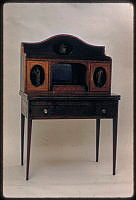
    This writing desk is believed to have originated from Baltimore, Maryland. The desk features contrasting inlay and veneer as well as eglomise painted oval panels. It was placed in the Green Room during the John F. Kennedy administration. Bates Littlehales photographed the desk in March 1962. This photograph is part of the Lorraine Waxman Pearce Collection. Lorraine Waxman Pearce served as the first White House Curator from 1961 to 1962. As curator, she oversaw refurbishment projects, implemented collections policies, and collaborated with First Lady Jacqueline Kennedy to write the first White House guidebook—a joint publication of the National Geographic Society and the White House Historical Association. Since its original publication in 1962, “The White House: An Historic Guide” has been revised, updated, and printed for over 60 years.
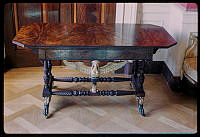
  • Sofa Table in the Red Room, Lorraine Waxman Pearce Collection
    Unknown
    furniture
    furnishings
    White House Collection
    State Floor
    Red Room
    tables
    This photograph of a sofa table in the Red Room was likely taken during the John F. Kennedy administration. The mahogany table has gilded winged caryatids and verde antique feet that display elements from the ancient world, which were popular in New York during the period this was likely made, circa 1815 to 1820. Sofa tables like this one were placed before sofas and used for drawing or writing and were seldom made in America. This table became part of the White House Collection in 1961 and is inspired after the work of Charles Honoré Lannuier. This photograph is part of the Lorraine Waxman Pearce Collection. Lorraine Waxman Pearce served as the first White House Curator from 1961 to 1962. As curator, she oversaw refurbishment projects, implemented collections policies, and collaborated with First Lady Jacqueline Kennedy to write the first White House guidebook—a joint publication of the National Geographic Society and the White House Historical Association. Since its original publication in 1962, “The White House: An Historic Guide” has been revised, updated, and printed for over 60 years.
  • Rococo-Revival Armchair, White House Collection
    Abbie Rowe
    seats
    furniture
    furnishings
    White House Collection
    This photograph of a Rococo-Revival armchair was taken by Abbie Rowe at the White House circa 1961 to 1962. It is similar to the one in G. P. A. Healy's famous portrait of President Abraham Lincoln. The chair was found in storage and later reupholstered in wine-red velvet that was popular in the Victorian era. White House Curator Lorraine Waxman Pearce was most likely responsible for researching and arranging for the chair's restoration. This photograph is part of the Lorraine Waxman Pearce Collection. Lorraine Waxman Pearce served as the first White House Curator from 1961 to 1962. As curator, she oversaw refurbishment projects, implemented collections policies, and collaborated with First Lady Jacqueline Kennedy to write the first White House guidebook—a joint publication of the National Geographic Society and the White House Historical Association. Since its original publication in 1962, “The White House: An Historic Guide” has been revised, updated, and printed for over 60 years.
  • White Garden Bench, White House Collection
    Unknown
    White House Collection
    furnishings
    furniture
    seats
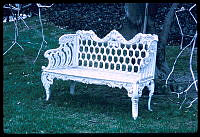
    This white, cast-iron bench is of the Rococo Revival style during the Victorian era and may have been purchased during the Millard Fillmore administration. Bates Littlehales photographed the bench on the White House Grounds in March 1962. This photograph is part of the Lorraine Waxman Pearce Collection. Lorraine Waxman Pearce served as the first White House Curator from 1961 to 1962. As curator, she oversaw refurbishment projects, implemented collections policies, and collaborated with First Lady Jacqueline Kennedy to write the first White House guidebook—a joint publication of the National Geographic Society and the White House Historical Association. Since its original publication in 1962, “The White House: An Historic Guide” has been revised, updated, and printed for over 60 years.
  • Rococo-Revival Armchair, White House Collection
    Unknown
    seats
    furniture
    furnishings
    White House Collection
    This Rococo-Revival armchair was taken by George F. Mobley in 1962. It is similar to the one in G. P. A. Healy's famous portrait of President Abraham Lincoln. The chair was found in storage and reupholstered in wine-red velvet that was popular in the Victorian era. White House Curator Lorraine Waxman Pearce was most likely responsible for researching and arranging for the chair's restoration. This photograph is part of the Lorraine Waxman Pearce Collection. Lorraine Waxman Pearce served as the first White House Curator from 1961 to 1962. As curator, she oversaw refurbishment projects, implemented collections policies, and collaborated with First Lady Jacqueline Kennedy to write the first White House guidebook—a joint publication of the National Geographic Society and the White House Historical Association. Since its original publication in 1962, “The White House: An Historic Guide” has been revised, updated, and printed for over 60 years.
  • Vase, White House Collection
    Pierre-Louis Dagoty
    vases
    furnishings
    White House Collection
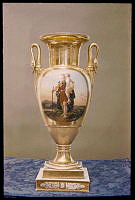
    This vase, attributed to Pierre-Louis Dagoty of Paris, was purchased for the Red Room. It shows a landscape with Byzantine general Belisarius. The swans on the handles are often seen on French Empire objects. This firm also produced a dinner and dessert service for the President's House in 1817. The vase had been in storage until it was identified by White House Curator Lorraine Waxman Pearce as an item from the James Monroe presidency. This photograph is part of the Lorraine Waxman Pearce Collection. Lorraine Waxman Pearce served as the first White House Curator from 1961 to 1962. As curator, she oversaw refurbishment projects, implemented collections policies, and collaborated with First Lady Jacqueline Kennedy to write the first White House guidebook—a joint publication of the National Geographic Society and the White House Historical Association. Since its original publication in 1962, “The White House: An Historic Guide” has been revised, updated, and printed for over 60 years.
  • White Garden Bench, White House Collection
    Unknown
    White House Collection
    furnishings
    furniture
    seats
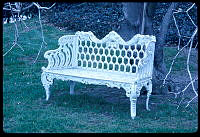
    This white, cast-iron bench is of the Rococo Revival style during the Victorian era and may have been purchased during the Millard Fillmore administration. Bates Littlehales photographed the bench on the White House Grounds in March 1962. This photograph is part of the Lorraine Waxman Pearce Collection. Lorraine Waxman Pearce served as the first White House Curator from 1961 to 1962. As curator, she oversaw refurbishment projects, implemented collections policies, and collaborated with First Lady Jacqueline Kennedy to write the first White House guidebook—a joint publication of the National Geographic Society and the White House Historical Association. Since its original publication in 1962, “The White House: An Historic Guide” has been revised, updated, and printed for over 60 years.
  • Mahogany Empire Sofa, White House Collection
    Unknown
    White House Collection
    furnishings
    furniture
    seats
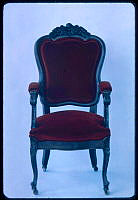
    This mahogany sofa was crafted in the Empire style with bronze sphinx heads decorating the corners under the arm supports. The sofa is believed to have belonged to First Lady Dolley Madison. This photograph captures the sofa as it appeared in the Red Room, during the John F. Kennedy administration. The silk upholstery was the same as the wall coverings at the time. This photograph is part of the Lorraine Waxman Pearce Collection. Lorraine Waxman Pearce served as the first White House Curator from 1961 to 1962. As curator, she oversaw refurbishment projects, implemented collections policies, and collaborated with First Lady Jacqueline Kennedy to write the first White House guidebook—a joint publication of the National Geographic Society and the White House Historical Association. Since its original publication in 1962, “The White House: An Historic Guide” has been revised, updated, and printed for over 60 years.
  • Monroe Silver Flatware, White House Collection
    Unknown
    White House Collection
    flatware
    silver
    tableware
    This photograph is of silver flatware acquired for the White House during President James Monroe's administration, from 1817 to 1825. It was taken by an unknown photographer circa 1962. The knives bear an engraving that reads "President's House." White House Curator Lorriane Waxman Pearce recognized the flatware, which had previously been in storage. This photograph is part of the Lorraine Waxman Pearce Collection. Lorraine Waxman Pearce served as the first White House Curator from 1961 to 1962. As curator, she oversaw refurbishment projects, implemented collections policies, and collaborated with First Lady Jacqueline Kennedy to write the first White House guidebook—a joint publication of the National Geographic Society and the White House Historical Association. Since its original publication in 1962, “The White House: An Historic Guide” has been revised, updated, and printed for over 60 years.
  • Glass Locket with Jefferson Hair, White House Collection
    Fossin et Fils
    jewelry
    fashion
    clothing & accessories
    White House Collection
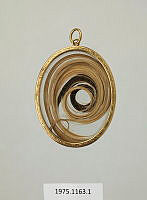
    This glass locket containing the hair of President Thomas Jefferson and his daughter Martha was acquired for the White House Collection in 1975 during the Gerald R. Ford presidency. The locket is attributed to Fossin et Fils, a prestigious Paris jewelry company that provided goods to King Louis-Philippe of France (1830–1848) as well as other European heads of state, and was produced circa 1825 to 1868.
  • Punch Bowl, White House Collection
    Tiffany and Company
    silver
    serveware
    containers
    White House Collection
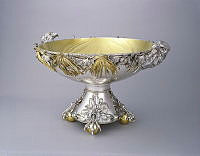
    This punch bowl was created by Tiffany and Company in 1874. The punch bowl features an intricate and realistic design of pine needles with eagle's heads and talons around the brim of the bowl. The design of the punch bowl is attributed to James H. Whitehouse and Eugene Soligny is attributed with the modeling and chasing. An "M" stamp at the bottom of the bowl indicates the bowl was made under the leadership of Edward C. Moore during his tenure at Tiffany and Company. This piece was donated to the White House Collection in 2005 during the George W. Bush administration.
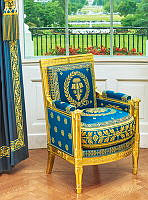
  • Bergère (Enclosed Armchair), White House Collection
    Pierre-Antoine Bellange
    seats
    furniture
    furnishings
    State Floor
    Blue Room
    White House Collection
    This bergère by Pierre-Antoine Bellangé of Paris is part of a 53-piece gilded beechwood suite ordered for the Oval Room (later called the Blue Room) by President James Monroe in 1817. A bergère is an armchair with upholstered and enclosed sides. The bergère is one of two made for the president and first lady. The bergère was photographed by Bruce White in the Blue Room of the White House.
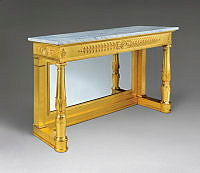
  • French Empire Pier Table, White House Collection
    Pierre-Antoine Bellange
    tables
    furniture
    furnishings
    White House Collection
    This carved and gilded beechwood pier table is of the French Empire style and was manufactured by Pierre-Antoine Bellange of Paris. This table is the only piece of the 53-piece Bellange suite purchased by President James Monroe that has always remained in the White House.
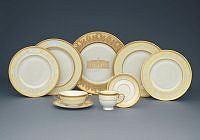
  • Clinton Anniversary Service, White House Collection
    Lenox China
    tableware
    State Service
    dishes
    drinking cups
    White House Collection
    200th Anniversary of the White House
    This selection of the 200th anniversary china was made by Lenox China of Trenton, New Jersey. President Bill Clinton and First Lady Hillary Clinton selected a state service with this design to celebrate the White House's 200th anniversary in 2000. Features in the photo from left to right across the back are a dessert plate, dinner plate, service late, fish plate and a salad plate. In front left to right are a cream soup cup and saucer, a teacup and its accompanying saucer.
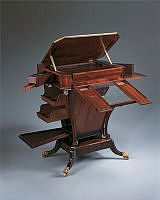
  • Tapered Work Table (Opened), White House Collection
    Duncan Phyfe
    furniture
    furnishings
    case goods
    White House Collection
    This tapered form work table is one of only four known nearly identical tables (a second is also present in the White House). Here it is shown with all its drawers and compartments open. Its form and complexity attribute the work to Duncan Phyfe of New York. This desk was made for a variety of tasks including: writing, sewing, or miniature painting. Phyfe was born in Scotland and emigrated to New York in 1784. He became one of the premiere cabinet makers in the United States during the first half of the 19th century, known for blending the previous English Neoclassical and Regency styles together in a distinctive way. Phyfe benefited from his location in New York City on Fulton Street, where he was able to ship his furniture out to the southern States and the rich cotton magnates there, as well as to international ports. The table was a gift of the Richard King Mellon Foundation to the White House in 1971.
  • Armchair, White House Collection
    A. H. Davenport
    seats
    furniture
    furnishings
    White House Collection
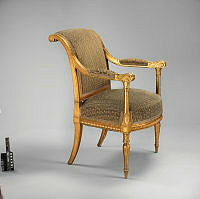
    This scrolled-back armchair was created by A. H. Davenport in 1902 during the Theodore Roosevelt administration. The armchair is one of six chairs ordered for the Green Room of the White House. The seats and backs were upholstered in tapestry fabric, making them the most expensive type of armchairs in the Green Room. The chairs were originally painted white but were later gilded in the 1930s.
  • Tall Case Clock, White House Collection
    E. Howard Watch and Clock Company
    furniture
    furnishings
    clocks
    White House Collection
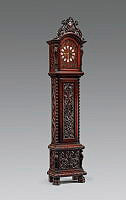
    This tall case clock by E. Howard Watch and Clock Company of Boston, Massachusetts was purchased for the White House in 1882 during the Chester A. Arthur administration. The clock was originally placed in the Cross Hall on the State Floor of the White House, where it remained until the 1930s when it was moved around to a number of rooms on the Ground Floor until 2003. President Arthur added a number of furnishings to the White House during his time office, though this clock was one of the few items to survive the 1902 White House renovation.