• Oval Office, Eisenhower Administration
    Department of Defense, Department of the Navy, Naval Photographic Center
    Oval Office
    West Wing
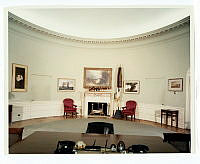
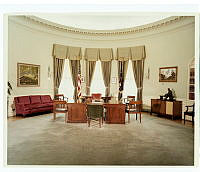
    This photograph of the Oval Office was taken on January 14, 1961 during the Dwight D. Eisenhower administration. This photograph captures how the Oval Office looked in the final days of President Eisenhower's time in office before President John F. Kennedy was sworn into office. Before 1909, the president's office was located in the Executive Mansion. During the William H. Taft administration, the West Wing doubled in size from the 1902 Theodore Roosevelt renovation and included a presidential oval office. In 1934, during the Franklin D. Roosevelt administration, the West Wing was expanded and renovated, with the Oval Office relocated to the West Wing’s southeast corner.
  • Oval Office, Eisenhower Administration
    Department of Defense, Department of the Navy, Naval Photographic Center
    Oval Office
    West Wing
    This photograph of the Oval Office was taken on January 14, 1961 during the Dwight D. Eisenhower administration. This photograph captures how the Oval Office looked in the final days of President Eisenhower's time in office before President John F. Kennedy was sworn into office. Before 1909, the president's office was located in the Executive Mansion. During the William H. Taft administration, the West Wing doubled in size from the 1902 Theodore Roosevelt renovation and included a presidential oval office. In 1934, during the Franklin D. Roosevelt administration, the West Wing was expanded and renovated, with the Oval Office relocated to the West Wing’s southeast corner.
  • Presidential Seal, Oval Office, Eisenhower Administration
    Abbie Rowe
    West Wing
    Oval Office
    Presidential Seal
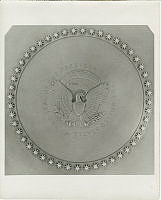
    This photograph of the Presidential Seal on the ceiling of the Oval Office was taken on February 27, 1957 during the Dwight D. Eisenhower administration. Before 1909, the president's office was located in the Executive Mansion. During the William H. Taft administration, the West Wing doubled in size from the 1902 Theodore Roosevelt renovation and included a presidential oval office. In 1934, during the Franklin D. Roosevelt administration, the West Wing was expanded and renovated, with the Oval Office relocated to the West Wing’s southeast corner.
  • Oval Office, Eisenhower Administration
    Abbie Rowe
    Oval Office
    West Wing
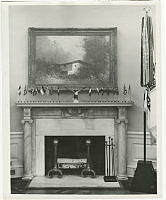
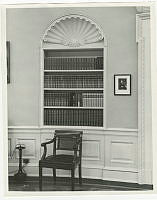
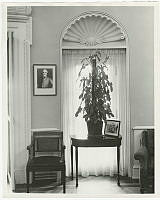
    This photograph of the Oval Office was taken on February 27, 1957 during the Dwight D. Eisenhower administration. Before 1909, the president's office was located in the Executive Mansion. During the William H. Taft administration, the West Wing doubled in size from the 1902 Theodore Roosevelt renovation and included a presidential oval office. In 1934, during the Franklin D. Roosevelt administration, the West Wing was expanded and renovated, with the Oval Office relocated to the West Wing’s southeast corner.
  • Oval Office Wall Sconce, Eisenhower Administration
    Abbie Rowe
    West Wing
    Oval Office
    lighting
    sconces
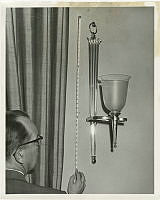
    This photograph of a wall sconce in the Oval Office was taken on February 27, 1957 during the Dwight D. Eisenhower administration. In the photograph is an unidentified man measuring the sconce. Before 1909, the president's office was located in the Executive Mansion. During the William H. Taft administration, the West Wing doubled in size from the 1902 Theodore Roosevelt renovation and included a presidential oval office. In 1934, during the Franklin D. Roosevelt administration, the West Wing was expanded and renovated, with the Oval Office relocated to the West Wing’s southeast corner.
  • Oval Office, Eisenhower Administration
    Department of Defense, Department of the Navy, Naval Photographic Center
    Oval Office
    West Wing
    This photograph of the Oval Office was taken on January 14, 1961 during the Dwight D. Eisenhower administration. This photograph captures how the Oval Office looked in the final days of President Eisenhower's time in office before President John F. Kennedy was sworn into office. Before 1909, the president's office was located in the Executive Mansion. During the William H. Taft administration, the West Wing doubled in size from the 1902 Theodore Roosevelt renovation and included a presidential oval office. In 1934, during the Franklin D. Roosevelt administration, the West Wing was expanded and renovated, with the Oval Office relocated to the West Wing’s southeast corner.
  • Oval Office, Eisenhower Administration
    Abbie Rowe
    paintings
    West Wing
    Oval Office
    cityscapes
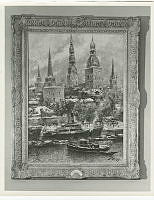
    This photograph of the painting "Towers of Riga" was taken in the Oval Office on February 27, 1957 during the Dwight D. Eisenhower administration. "Towers of Riga" was painted by Ludolfs Liberts and gifted to President Eisenhower by a group of displaced Latvians to thank him for assisting in their "new start" in the United States. Before 1909, the president's office was located in the Executive Mansion. During the William H. Taft administration, the West Wing doubled in size from the 1902 Theodore Roosevelt renovation and included a presidential oval office. In 1934, during the Franklin D. Roosevelt administration, the West Wing was expanded and renovated, with the Oval Office relocated to the West Wing’s southeast corner.
  • Oval Office, Eisenhower Administration
    Abbie Rowe
    Oval Office
    West Wing
    This photograph of the Oval Office was taken on February 27, 1957 during the Dwight D. Eisenhower administration. Before 1909, the president's office was located in the Executive Mansion. During the William H. Taft administration, the West Wing doubled in size from the 1902 Theodore Roosevelt renovation and included a presidential oval office. In 1934, during the Franklin D. Roosevelt administration, the West Wing was expanded and renovated, with the Oval Office relocated to the West Wing’s southeast corner.
  • Oval Office, Eisenhower Administration
    Abbie Rowe
    West Wing
    Oval Office
    paintings
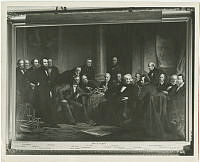
    This photograph of the painting "Men in Progress" was taken in the Oval Office on February 27, 1957 during the Dwight D. Eisenhower administration. "Men in Progress" was painted by Christian Schussele in 1862 and was loaned to the White House by the National Portrait Gallery. Before 1909, the president's office was located in the Executive Mansion. During the William H. Taft administration, the West Wing doubled in size from the 1902 Theodore Roosevelt renovation and included a presidential oval office. In 1934, during the Franklin D. Roosevelt administration, the West Wing was expanded and renovated, with the Oval Office relocated to the West Wing’s southeast corner.
  • Oval Office, Eisenhower Administration
    Abbie Rowe
    Oval Office
    West Wing
    This photograph of the Oval Office was taken on February 27, 1957 during the Dwight D. Eisenhower administration. Before 1909, the president's office was located in the Executive Mansion. During the William H. Taft administration, the West Wing doubled in size from the 1902 Theodore Roosevelt renovation and included a presidential oval office. In 1934, during the Franklin D. Roosevelt administration, the West Wing was expanded and renovated, with the Oval Office relocated to the West Wing’s southeast corner.
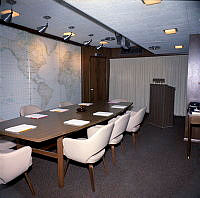
  • The Situation Room, Kennedy Administration
    Robert L. Knudsen
    Situation Room
    West Wing
    This photograph of the Situation Room, then known as the West Wing Conference Room, was taken by Robert Knudsen on February 7, 1962 during the John F. Kennedy administration.
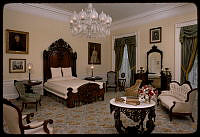
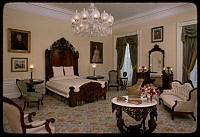
  • Lincoln Bedroom, Ford Administration
    Larry D. Kinney
    Second Floor
    Lincoln Bedroom
    This photograph of the Lincoln Bedroom was taken in August 1976 by Larry D. Kinney during the administration of Gerald R. Ford. Located on the Second Floor of the White House, in modern times the Lincoln Bedroom is used for official and personal guests of the president’s family. In the past, it served as an office and the Cabinet Room. The room became a bedroom in the family quarters during the 1902 Theodore Roosevelt renovation. The high-back bed, known as the Lincoln Bed, was purchased for the White House by First Lady Mary Todd Lincoln. While it was purchased during the Lincoln administration, the bed was probably never used by President Abraham Lincoln, nor was it originally placed in this room. Repurposed during the administration of President Harry S. Truman, the room features furniture, artwork, and refurbishing reminiscent of the 1860s. In 2005, the room underwent refurbishing under the direction of First Lady Laura Bush, enhancing the historical accuracy of the room.
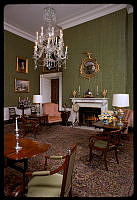
  • Green Room, Ford Administration
    Larry D. Kinney
    Green Room
    State Floor
    This photograph of the Green Room was taken in February 1975 by Larry D. Kinney during the administration of Gerald R. Ford. The Green Room is located on the State Floor of the Executive Mansion. It was the first room named after the color of its textiles and has Federal style furnishings. The elegant but relaxed parlor is used for small gatherings, interviews, and teas.
  • East Landing, Biden Administration
    David Wiegold
    East Landing
    East Wing
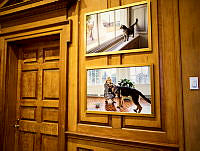
    This photograph of the East Landing was taken by David Wiegold on November 27, 2023 during a press preview of the White House holiday decorations. The East Landing is located in the East Wing of the White House and is among the first sights visitors encounter on a public tour of the White House. The surrounding windows provide views into the Jacqueline Kennedy Garden, also known as the East Garden, and lead to the East Colonnade.
  • Table Setting in the State Dining Room, Lorraine Waxman Pearce Collection
    Unknown
    place settings
    State Floor
    State Dining Room
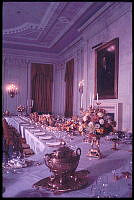
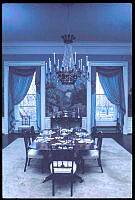
    This photograph features table settings for an event in the State Dining Room during the John F. Kennedy administration. The State Dining Room is located on the State Floor of the White House. The room is often the setting for state or official dinners and is the second largest room in the White House. This photograph is part of the Lorraine Waxman Pearce Collection. Lorraine Waxman Pearce served as the first White House Curator from 1961 to 1962. As curator, she oversaw refurbishment projects, implemented collections policies, and collaborated with First Lady Jacqueline Kennedy to write the first White House guidebook—a joint publication of the National Geographic Society and the White House Historical Association. Since its original publication in 1962, “The White House: An Historic Guide” has been revised, updated, and printed for over 60 years.

  • Table Setting in the State Dining Room, Lorraine Waxman Pearce Collection
    George F. Mobley
    Bates Littlehales
    State Floor
    State Dining Room
    place settings
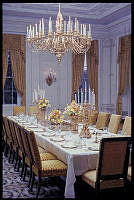
    This photograph taken February 1962, during the John F. Kennedy administration, shows a table setting for a lunch or small dinner in the State Dining Room. The centerpieces were ordered by President James Monroe in 1817. This image was featured in the first edition of the White House guidebook. This photograph is part of the Lorraine Waxman Pearce Collection. Lorraine Waxman Pearce served as the first White House Curator from 1961 to 1962. As curator, she oversaw refurbishment projects, implemented collections policies, and collaborated with First Lady Jacqueline Kennedy to write the first White House guidebook—a joint publication of the National Geographic Society and the White House Historical Association. Since its original publication in 1962, “The White House: An Historic Guide” has been revised, updated, and printed for over 60 years.
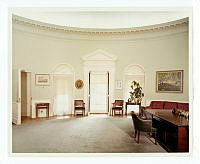
  • Table Setting in the Family Dining Room, Lorraine Waxman Pearce Collection
    George F. Mobley
    Bates Littlehales
    State Floor
    Family Dining Room
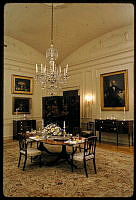
    This photograph taken in May 1962, during the John F. Kennedy administration, shows the Family Dining Room furnished with American pieces of the Federal period. The portrait on the right sideboard is of President John Tyler by G. P. A. Healy. This image was featured in the first edition of the White House guidebook. This photograph is part of the Lorraine Waxman Pearce Collection. Lorraine Waxman Pearce served as the first White House Curator from 1961 to 1962. As curator, she oversaw refurbishment projects, implemented collections policies, and collaborated with First Lady Jacqueline Kennedy to write the first White House guidebook—a joint publication of the National Geographic Society and the White House Historical Association. Since its original publication in 1962, “The White House: An Historic Guide” has been revised, updated, and printed for over 60 years.
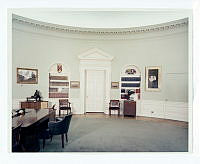
  • President's Dining Room, Kennedy Administration, Lorraine Waxman Pearce Collection
    George F. Mobley
    President's Dining Room
    Second Floor
    This photograph of the President's Dining Room was likely taken during the John F. Kennedy administration. The President’s Dining Room is located on the Second Floor of the White House. Originally a bedroom, the space was converted to a private dining room, where the first family usually gathers for breakfast and lunch. The room also features a panoramic wallpaper entitled "Views of the American War of Independence" by Jean Zuber et Cie which features events from the American Revolution against the backdrop of natural landmarks. This photograph is part of the Lorraine Waxman Pearce Collection. Lorraine Waxman Pearce served as the first White House Curator from 1961 to 1962. As curator, she oversaw refurbishment projects, implemented collections policies, and collaborated with First Lady Jacqueline Kennedy to write the first White House guidebook—a joint publication of the National Geographic Society and the White House Historical Association. Since its original publication in 1962, “The White House: An Historic Guide” has been revised, updated, and printed for over 60 years.
  • Ida McKinley's Second Floor Bedroom, Lorraine Waxman Pearce Collection
    Frances Benjamin Johnston
    Second Floor
    Bedroom
    President's Dining Room
    This photograph of First Lady Ida Saxton McKinley's bedroom was taken by Frances Benjamin Johnston circa 1897 to 1901. The bedroom, possibly the Prince of Wales Bedroom, was located on the Second Floor of the Executive Mansion. The Prince of Wales Bedroom now serves as the President's Dining Room. This photograph is part of the Lorraine Waxman Pearce Collection. The original photograph can be found at the Library of Congress. Lorraine Waxman Pearce served as the first White House Curator from 1961 to 1962. As curator, she oversaw refurbishment projects, implemented collections policies, and collaborated with First Lady Jacqueline Kennedy to write the first White House guidebook—a joint publication of the National Geographic Society and the White House Historical Association. Since its original publication in 1962, “The White House: An Historic Guide” has been revised, updated, and printed for over 60 years.
  • White House Corridor (Entrance Hall), Lorraine Waxman Pearce Collection
    Frances Benjamin Johnston
    Entrance Hall
    State Floor
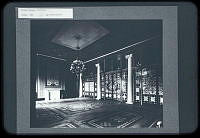
    This circa 1889 black and white photograph by Frances Benjamin Johnston depicts the Entrance Hall of the White House, including a glass screen created by Louis Comfort Tiffany. In 1882, Tiffany created this glass screen to separate the Entrance Hall from the Cross Hall. The glass screen featured topaz, ruby, and amethyst jewels set into the glass alongside four eagles and a shield with the initials "US." The glass screen was removed during the Theodore Roosevelt renovation, and portions of it were auctioned off in 1903. No known surviving example of the glass exists after the glass was destroyed in a fire in 1923. This photograph is part of the Lorraine Waxman Pearce Collection. The original photograph can be found at the Library of Congress. Lorraine Waxman Pearce served as the first White House Curator from 1961 to 1962. As curator, she oversaw refurbishment projects, implemented collections policies, and collaborated with First Lady Jacqueline Kennedy to write the first White House guidebook—a joint publication of the National Geographic Society and the White House Historical Association. Since its original publication in 1962, “The White House: An Historic Guide” has been revised, updated, and printed for over 60 years.
  • Green Room circa 1881, Lorraine Waxman Pearce Collection
    Frances Benjamin Johnston
    State Floor
    Green Room
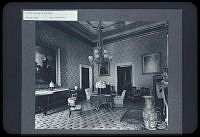
    This 1881 black and white photograph of the Green Room by Frances Benjamin Johnston was likely captured after it was redecorated by W.B. Moses and Co. for First Lady Lucretia Garfield. The redecorating was completed after the death of President James A. Garfield. The Green Room is located on the State Floor of the White House This photograph is part of the Lorraine Waxman Pearce Collection. The original photograph can be found at the Library of Congress. Lorraine Waxman Pearce served as the first White House Curator from 1961 to 1962. As curator, she oversaw refurbishment projects, implemented collections policies, and collaborated with First Lady Jacqueline Kennedy to write the first White House guidebook—a joint publication of the National Geographic Society and the White House Historical Association. Since its original publication in 1962, “The White House: An Historic Guide” has been revised, updated, and printed for over 60 years.
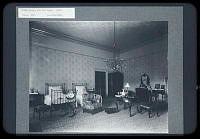
  • Second Floor Bedroom, Lorraine Waxman Pearce Collection
    Frances Benjamin Johnston
    Bedroom
    Second Floor
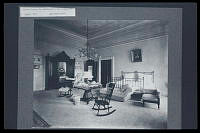
    This photograph of a Second Floor bedroom in the White House was taken by Frances Benjamin Johnston circa 1893. The caption on the photograph states the bedroom was located in the southwest corner of the Executive Mansion. This photograph is part of the Lorraine Waxman Pearce Collection. The original photograph can be found at the Library of Congress. Lorraine Waxman Pearce served as the first White House Curator from 1961 to 1962. As curator, she oversaw refurbishment projects, implemented collections policies, and collaborated with First Lady Jacqueline Kennedy to write the first White House guidebook—a joint publication of the National Geographic Society and the White House Historical Association. Since its original publication in 1962, “The White House: An Historic Guide” has been revised, updated, and printed for over 60 years.
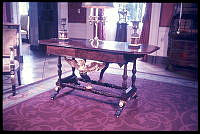
  • Sofa Table in the Red Room, Lorraine Waxman Pearce Collection
    Unknown
    furniture
    furnishings
    White House Collection
    State Floor
    Red Room
    tables
    This photograph of a sofa table in the Red Room was likely taken during the John F. Kennedy administration. The mahogany table has gilded winged caryatids and verde antique feet that display elements from the ancient world, which were popular in New York during the period this was likely made, circa 1815 to 1820. Sofa tables like this one were placed before sofas and used for drawing or writing and were seldom made in America. This table became part of the White House Collection in 1961 and is inspired after the work of Charles Honoré Lannuier. This photograph is part of the Lorraine Waxman Pearce Collection. Lorraine Waxman Pearce served as the first White House Curator from 1961 to 1962. As curator, she oversaw refurbishment projects, implemented collections policies, and collaborated with First Lady Jacqueline Kennedy to write the first White House guidebook—a joint publication of the National Geographic Society and the White House Historical Association. Since its original publication in 1962, “The White House: An Historic Guide” has been revised, updated, and printed for over 60 years.