• Possible Speech, Lorraine Waxman Pearce Collection
    Lorraine Waxman Pearce
    documents
    speeches & lectures
    staff
    Residence staff
    This document is of, possibly, a speech from a presentation on White House history, art, and furniture. Starting on a page with the page number "19" through "25," the document contains paragraphs with "[SLIDE]" comments that suggest it is part of a larger presentation. The speech was likely given by White House Curator Lorraine Waxman Pearce. This document is part of the Lorraine Waxman Pearce Collection. Lorraine Waxman Pearce served as the first White House Curator from 1961 to 1962. As curator, she oversaw refurbishment projects, implemented collections policies, and collaborated with First Lady Jacqueline Kennedy to write the first White House guidebook—a joint publication of the National Geographic Society and the White House Historical Association. Since its original publication in 1962, “The White House: An Historic Guide” has been revised, updated, and printed for over 60 years.

  • "Aspects of the American Decorative Arts Museum," Lorraine Waxman Pearce Collection
    Lorraine Waxman Pearce
    staff
    documents
    Residence staff
    speeches & lectures
    This is a lecture titled “Aspects of the American Decorative Arts Museum” written by White House Curator Lorraine Waxman Pearce. A decorative arts scholar, Pearce graduated from the Winterthur Program in Early American Culture at the University of Delaware in 1958. Shortly after President John F. Kennedy’s inauguration, First Lady Jacqueline Kennedy took steps towards preserving the historic integrity of the White House. In 1961, she created the Fine Arts Committee for the White House, established the White House Historical Association, and hired the first White House Curator—Lorraine Waxman Pearce. Pearce joined the White House in March of 1961. As curator, she oversaw refurbishment projects, implemented collections policies, and collaborated with Mrs. Kennedy to write the first White House guidebook—a joint publication of the National Geographic Society and the White House Historical Association. Since its original publication in 1962, “The White House: An Historic Guide” has been revised, updated, and printed for over 60 years. During her time in the White House, Pearce spoke at society luncheons, academic seminars, and other engagements about the White House restoration project. After her resignation from the White House, Pearce taught private fine and decorative art history classes in Washington, D.C. This lecture is part of the Lorraine Waxman Pearce Collection. Lorraine Waxman Pearce served as the first White House Curator from 1961 to 1962.
  • "Classical Taste in the Federal City," Lorraine Waxman Pearce Collection
    Lorraine Waxman Pearce
    staff
    documents
    Residence staff
    speeches & lectures
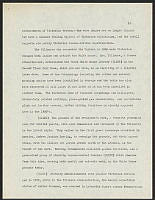
    This is a lecture titled “Classical Taste in the Federal City” written by White House Curator Lorraine Waxman Pearce circa 1963 to 1964. A decorative arts scholar, Pearce graduated from the Winterthur Program in Early American Culture at the University of Delaware in 1958. Shortly after President John F. Kennedy’s inauguration, First Lady Jacqueline Kennedy took steps towards preserving the historic integrity of the White House. In 1961, she created the Fine Arts Committee for the White House, established the White House Historical Association, and hired the first White House Curator—Lorraine Waxman Pearce. Pearce joined the White House in March of 1961. As curator, she oversaw refurbishment projects, implemented collections policies, and collaborated with Mrs. Kennedy to write the first White House guidebook—a joint publication of the National Geographic Society and the White House Historical Association. Since its original publication in 1962, “The White House: An Historic Guide” has been revised, updated, and printed for over 60 years. During her time in the White House, Pearce spoke at society luncheons, academic seminars, and other engagements about the White House restoration project. After her resignation from the White House, Pearce taught private fine and decorative art history classes in Washington, D.C. This lecture is part of the Lorraine Waxman Pearce Collection. Lorraine Waxman Pearce served as the first White House Curator from 1961 to 1962.
  • "The Creation of the President's House," Lorraine Waxman Pearce Collection
    Lorraine Waxman Pearce
    staff
    documents
    Residence staff
    speeches & lectures
    This is a lecture titled “The Creation of the President’s House” written by White House Curator Lorraine Waxman Pearce circa 1962. A decorative arts scholar, Pearce graduated from the Winterthur Program in Early American Culture at the University of Delaware in 1958. Shortly after President John F. Kennedy’s inauguration, First Lady Jacqueline Kennedy took steps towards preserving the historic integrity of the White House. In 1961, she created the Fine Arts Committee for the White House, established the White House Historical Association, and hired the first White House Curator—Lorraine Waxman Pearce. Pearce joined the White House in March of 1961. As curator, she oversaw refurbishment projects, implemented collections policies, and collaborated with Mrs. Kennedy to write the first White House guidebook—a joint publication of the National Geographic Society and the White House Historical Association. Since its original publication in 1962, “The White House: An Historic Guide” has been revised, updated, and printed for over 60 years. During her time in the White House, Pearce spoke at society luncheons, academic seminars, and other engagements about the White House restoration project. After her resignation from the White House, Pearce taught private fine and decorative art history classes in Washington, D.C. This lecture is part of the Lorraine Waxman Pearce Collection. Lorraine Waxman Pearce served as the first White House Curator from 1961 to 1962.
  • "The Creation of the President's House," Lorraine Waxman Pearce Collection
    Lorraine Waxman Pearce
    staff
    documents
    Residence staff
    speeches & lectures
    This is a lecture titled “The Creation of the President’s House” written by White House Curator Lorraine Waxman Pearce circa 1962. A decorative arts scholar, Pearce graduated from the Winterthur Program in Early American Culture at the University of Delaware in 1958. Shortly after President John F. Kennedy’s inauguration, First Lady Jacqueline Kennedy took steps towards preserving the historic integrity of the White House. In 1961, she created the Fine Arts Committee for the White House, established the White House Historical Association, and hired the first White House Curator—Lorraine Waxman Pearce. Pearce joined the White House in March of 1961. As curator, she oversaw refurbishment projects, implemented collections policies, and collaborated with Mrs. Kennedy to write the first White House guidebook—a joint publication of the National Geographic Society and the White House Historical Association. Since its original publication in 1962, “The White House: An Historic Guide” has been revised, updated, and printed for over 60 years. During her time in the White House, Pearce spoke at society luncheons, academic seminars, and other engagements about the White House restoration project. After her resignation from the White House, Pearce taught private fine and decorative art history classes in Washington, D.C. This lecture is part of the Lorraine Waxman Pearce Collection. Lorraine Waxman Pearce served as the first White House Curator from 1961 to 1962.
  • "The Creation of the President's House," Lorraine Waxman Pearce Collection
    Lorraine Waxman Pearce
    documents
    speeches & lectures
    staff
    Residence staff
    This is a lecture titled “The Creation of the President’s House” written by White House Curator Lorraine Waxman Pearce circa 1962. A decorative arts scholar, Pearce graduated from the Winterthur Program in Early American Culture at the University of Delaware in 1958. Shortly after President John F. Kennedy’s inauguration, First Lady Jacqueline Kennedy took steps towards preserving the historic integrity of the White House. In 1961, she created the Fine Arts Committee for the White House, established the White House Historical Association, and hired the first White House Curator—Lorraine Waxman Pearce. Pearce joined the White House in March of 1961. As curator, she oversaw refurbishment projects, implemented collections policies, and collaborated with Mrs. Kennedy to write the first White House guidebook—a joint publication of the National Geographic Society and the White House Historical Association. Since its original publication in 1962, “The White House: An Historic Guide” has been revised, updated, and printed for over 60 years. During her time in the White House, Pearce spoke at society luncheons, academic seminars, and other engagements about the White House restoration project. After her resignation from the White House, Pearce taught private fine and decorative art history classes in Washington, D.C. This lecture is part of the Lorraine Waxman Pearce Collection. Lorraine Waxman Pearce served as the first White House Curator from 1961 to 1962.
  • "The Creation of the President's House," Lorraine Waxman Pearce Collection
    Lorraine Waxman Pearce
    documents
    speeches & lectures
    staff
    Residence staff
    This is a lecture titled “The Creation of the President’s House” written by White House Curator Lorraine Waxman Pearce circa 1962. A decorative arts scholar, Pearce graduated from the Winterthur Program in Early American Culture at the University of Delaware in 1958. Shortly after President John F. Kennedy’s inauguration, First Lady Jacqueline Kennedy took steps towards preserving the historic integrity of the White House. In 1961, she created the Fine Arts Committee for the White House, established the White House Historical Association, and hired the first White House Curator—Lorraine Waxman Pearce. Pearce joined the White House in March of 1961. As curator, she oversaw refurbishment projects, implemented collections policies, and collaborated with Mrs. Kennedy to write the first White House guidebook—a joint publication of the National Geographic Society and the White House Historical Association. Since its original publication in 1962, “The White House: An Historic Guide” has been revised, updated, and printed for over 60 years. During her time in the White House, Pearce spoke at society luncheons, academic seminars, and other engagements about the White House restoration project. After her resignation from the White House, Pearce taught private fine and decorative art history classes in Washington, D.C. This lecture is part of the Lorraine Waxman Pearce Collection. Lorraine Waxman Pearce served as the first White House Curator from 1961 to 1962.
  • "Charles Honoré-Lannuier: French Ebeniste in America," Lorraine Waxman Pearce Collection
    Lorraine Waxman Pearce
    documents
    speeches & lectures
    staff
    Residence staff
    This is a lecture titled “Charles Honoré-Lannuier: French Ebeniste in America” written by White House Curator Lorraine Waxman Pearce. A decorative arts scholar, Pearce graduated from the Winterthur Program in Early American Culture at the University of Delaware in 1958. Shortly after President John F. Kennedy’s inauguration, First Lady Jacqueline Kennedy took steps towards preserving the historic integrity of the White House. In 1961, she created the Fine Arts Committee for the White House, established the White House Historical Association, and hired the first White House Curator—Lorraine Waxman Pearce. Pearce joined the White House in March of 1961. As curator, she oversaw refurbishment projects, implemented collections policies, and collaborated with Mrs. Kennedy to write the first White House guidebook—a joint publication of the National Geographic Society and the White House Historical Association. Since its original publication in 1962, “The White House: An Historic Guide” has been revised, updated, and printed for over 60 years. During her time in the White House, Pearce spoke at society luncheons, academic seminars, and other engagements about the White House restoration project. After her resignation from the White House, Pearce taught private fine and decorative art history classes in Washington, D.C. This lecture is part of the Lorraine Waxman Pearce Collection. Lorraine Waxman Pearce served as the first White House Curator from 1961 to 1962.
  • "Charles Honoré-Lannuier: French Ebeniste in America," Lorraine Waxman Pearce Collection
    Lorraine Waxman Pearce
    documents
    speeches & lectures
    staff
    Residence staff
    This is ecture titled “Charles Honoré-Lannuier: French Ebeniste in America” written by White House Curator Lorraine Waxman Pearce. A decorative arts scholar, Pearce graduated from the Winterthur Program in Early American Culture at the University of Delaware in 1958. Shortly after President John F. Kennedy’s inauguration, First Lady Jacqueline Kennedy took steps towards preserving the historic integrity of the White House. In 1961, she created the Fine Arts Committee for the White House, established the White House Historical Association, and hired the first White House Curator—Lorraine Waxman Pearce. Pearce joined the White House in March of 1961. As curator, she oversaw refurbishment projects, implemented collections policies, and collaborated with Mrs. Kennedy to write the first White House guidebook—a joint publication of the National Geographic Society and the White House Historical Association. Since its original publication in 1962, “The White House: An Historic Guide” has been revised, updated, and printed for over 60 years. During her time in the White House, Pearce spoke at society luncheons, academic seminars, and other engagements about the White House restoration project. After her resignation from the White House, Pearce taught private fine and decorative art history classes in Washington, D.C. This lecture is part of the Lorraine Waxman Pearce Collection. Lorraine Waxman Pearce served as the first White House Curator from 1961 to 1962.
  • "Charles Honoré-Lannuier: French Ebeniste in America," Lorraine Waxman Pearce Collection
    Lorraine Waxman Pearce
    documents
    speeches & lectures
    staff
    Residence staff
    This is a lecture titled “Charles Honoré-Lannuier: French Ebeniste in America” written by Lorraine Waxman Pearce. A decorative arts scholar, Pearce graduated from the Winterthur Program in Early American Culture at the University of Delaware in 1958. Shortly after President John F. Kennedy’s inauguration, First Lady Jacqueline Kennedy took steps towards preserving the historic integrity of the White House. In 1961, she created the Fine Arts Committee for the White House, established the White House Historical Association, and hired the first White House Curator—Lorraine Waxman Pearce. Pearce joined the White House in March of 1961. As curator, she oversaw refurbishment projects, implemented collections policies, and collaborated with Mrs. Kennedy to write the first White House guidebook—a joint publication of the National Geographic Society and the White House Historical Association. Since its original publication in 1962, “The White House: An Historic Guide” has been revised, updated, and printed for over 60 years. During her time in the White House, Pearce spoke at society luncheons, academic seminars, and other engagements about the White House restoration project. After her resignation from the White House, Pearce taught private fine and decorative art history classes in Washington, D.C. This lecture is part of the Lorraine Waxman Pearce Collection. Lorraine Waxman Pearce served as the first White House Curator from 1961 to 1962.
  • "The Distinctive Character of the Work of Lannuier," Lorraine Waxman Pearce Collection
    Lorraine Waxman Pearce
    documents
    speeches & lectures
    staff
    Residence staff
    This is a lecture titled “The Distinctive Character of the Work of Lannuier” written by White House Curator Lorraine Waxman Pearce. A decorative arts scholar, Pearce graduated from the Winterthur Program in Early American Culture at the University of Delaware in 1958. During her time in the White House, Pearce spoke at society luncheons, academic seminars, and other engagements about the White House restoration project. After her resignation from the White House, Pearce taught private fine and decorative art history classes in Washington, D.C. This lecture is part of the Lorraine Waxman Pearce Collection. Lorraine Waxman Pearce served as the first White House Curator from 1961 to 1962. As curator, she oversaw refurbishment projects, implemented collections policies, and collaborated with First Lady Jacqueline Kennedy to write the first White House guidebook—a joint publication of the National Geographic Society and the White House Historical Association. Since its original publication in 1962, “The White House: An Historic Guide” has been revised, updated, and printed for over 60 years.
  • "Neoclassical Tastes in American Furniture: the Federal and Empire Styles," Lorraine Waxman Pearce Collection
    Lorraine Waxman Pearce
    documents
    speeches & lectures
    staff
    Residence staff
    This is a lecture titled “Neo-classical tastes in American Furniture: The Federal and Empire Styles” written by White House Curator Lorraine Waxman Pearce for a lecture on October 15, 1962. A decorative arts scholar, Pearce graduated from the Winterthur Program in Early American Culture at the University of Delaware in 1958. During her time in the White House, Pearce spoke at society luncheons, academic seminars, and other engagements about the White House restoration project. After her resignation from the White House, Pearce taught private fine and decorative art history classes in Washington, D.C. This lecture is part of the Lorraine Waxman Pearce Collection. Lorraine Waxman Pearce served as the first White House Curator from 1961 to 1962. As curator, she oversaw refurbishment projects, implemented collections policies, and collaborated with First Lady Jacqueline Kennedy to write the first White House guidebook—a joint publication of the National Geographic Society and the White House Historical Association. Since its original publication in 1962, “The White House: An Historic Guide” has been revised, updated, and printed for over 60 years.
  • "Neoclassical Tastes in American Furniture: the Federal and Empire Styles" Audio Recording, Lorraine Waxman Pearce Collection
    Lorraine Waxman Pearce
    Residence staff
    staff
    speeches & lectures
    This is an audio recording of White House Curator Lorraine Waxman Pearce speaking at the Philadelphia Museum of Art circa 1962. Pearce's lecture was titled “Neo-classical tastes in American Furniture: The Federal and Empire Styles”. A decorative arts scholar, Pearce graduated from the Winterthur Program in Early American Culture at the University of Delaware in 1958. During her time in the White House, Pearce spoke at society luncheons, academic seminars, and other engagements about the White House restoration project. After her resignation from the White House, Pearce taught private fine and decorative art history classes in Washington, D.C. The lecture was originally recorded on magnetic tape. To read text of this lecture delivered at a different speaking engagement, see 1142352. This lecture is part of the Lorraine Waxman Pearce Collection. Lorraine Waxman Pearce served as the first White House Curator from 1961 to 1962. As curator, she oversaw refurbishment projects, implemented collections policies, and collaborated with First Lady Jacqueline Kennedy to write the first White House guidebook—a joint publication of the National Geographic Society and the White House Historical Association. Since its original publication in 1962, “The White House: An Historic Guide” has been revised, updated, and printed for over 60 years.
  • President Roosevelt Delievers a Speech in Waterville, Maine
    Underwood & Underwood
    speeches
    travel
    Maine
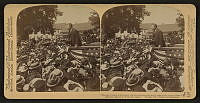
    This stereograph by Underwood & Underwood of President Theodore Roosevelt was taken circa 1902 during a visit to Waterville, Maine. During his presidency, Roosevelt wore formal attire for public outings. Here, he wears a dark frock coat and holds a top hat, which remained common for formal occasions, although the crown had become shorter by the 1890s. Around him, people in the crowd wear a range of hat styles, including the fedora, which was then growing in popularity. A former governor of New York, Roosevelt became president upon the assassination of William McKinley on September 14, 1901, and served until March 4, 1909.
  • President Johnson Delivers "The American Promise" Speech
    Cecil Stoughton
    speeches
    bills
    Washington, D.C.
    U.S. Capitol
    Congress
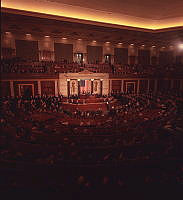
    This photograph by Cecil Stoughton is of President Lyndon B. Johnson at the speaker's podium in the House Chamber of the United States Capitol addressing a Joint Session of Congress on March 15, 1965. Johnson delivered the delivered his "Special Message to the Congress: The American Promise" speech, which urged the passage of the Voting Rights Act. The speech was broadcast nationwide.
  • President Obama and Prime Minister of Ireland in the Roosevelt Room
    Lawrence Jackson
    Roosevelt Room
    St. Patrick's Day
    West Wing
    speeches
    head of state
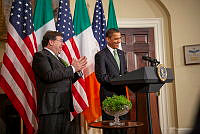
    This White House photograph of President Barack Obama and Taoiseach Brian Cowen of Ireland was taken by Lawrence Jackson on March 17, 2009. President Obama and Taoiseach Cowen, also known as a prime minister, are pictured holding a shamrock ceremony in the Roosevelt Room of the White House.
  • President Obama Delivers a St. Patrick's Day Toast at the Capitol
    Pete Souza
    St. Patrick's Day
    head of state
    Washington, D.C.
    Congress
    speeches
    U.S. Capitol
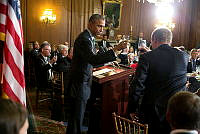
    This White House photograph of President Barack Obama delivering a toast during a St. Patrick's Day luncheon at the United States Capitol was taken by Pete Souza on March 17, 2015. President Obama is pictured alongside Taoiseach Enda Kenny of Ireland, also known as the prime minister.
  • President Obama Announces the Death of Osama bin Laden
    Pete Souza
    speeches
    counterterrorism
    State Floor
    East Room
    September 11
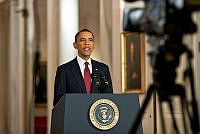
    This photograph of President Barack Obama delivering a statement on the death of Osama bin Laden was taken by Pete Souza on May 1, 2011. President Obama spoke live on television from the East Room late on May 1. Bin Laden was the leader of the terrorist group al Qaeda, who were responsible for the September 11, 2001 terrorist attacks on the World Trade Center in New York City, the Pentagon in Arlington, Virginia, and Flight 93, which crashed in Shanksville, Pennsylvania. His death was carried out through a military mission led by members of the United States Navy SEALs.
  • President Bush Addresses the Nation on September 11, 2001
    Paul Morse
    speeches
    West Wing
    Oval Office
    September 11
    counterterrorism
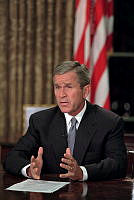
    This photograph, taken by Paul Morse, shows President George W. Bush delivering an address to the nation from the Oval Office following the terrorist attacks on September 11, 2001. Bush delivered the live televised address that evening. Contributors to the speech included President Bush; speechwriters John McConnell, David Frum, Matthew Scully, and Michael J. Gerson; national security advisor Condoleezza Rice and her deputy assistant Stephen J. Hadley; and members of the White House communications team. In his remarks, Bush mourned the loss of American citizens yet asserted the strength of the nation, promised retribution for the perpetrators of the attacks and their supporters, and offered words of prayer.
  • President Donald Trump Gives His Inaugural Address
    Cristian L. Ricardo
    speeches
    inaugurations
    U.S. Capitol
    Washington, D.C.
    This photograph of President Donald Trump delivering his presidential inaugural address was taken during the 58th Presidential Inauguration at the U.S. Capitol Building in Washington, D.C. on January 20, 2017. This photograph was taken by U.S. Marine Corps Lance Cpl. Cristian L. Ricardo for the Department of Defense.
  • Guests at the Status of Women Convention
    Joseph J. Scherschel
    speech
    South Lawn
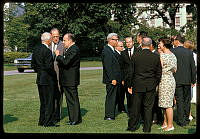
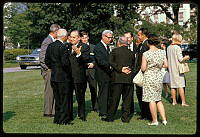
    This photograph by Joseph J. Scherschel shows guests, including the recently-nominated United States Ambassador to the United Nations Arthur J. Goldberg, lingering on the South Lawn following President Lyndon B. Johnson's remarks to the 400 delegates of the Status of Women Convention on July 29, 1965. The convention arose from the Presidential Commission on the Status of Women. The commission was created by President John F. Kennedy through an executive order and the first chair was former first lady Eleanor Roosevelt -- her last public position. Following the commission's conclusion, several members went on to found the National Organization for Women.
  • Guests at the Status of Women Convention
    Joseph J. Scherschel
    speech
    South Lawn
    This photograph by Joseph J. Scherschel shows guests, including the recently-nominated United States Ambassador to the United Nations Arthur J. Goldberg, lingering on the South Lawn following President Lyndon B. Johnson's remarks to the 400 delegates of the Status of Women Convention on July 29, 1965. The convention arose from the Presidential Commission on the Status of Women. The commission was created by President John F. Kennedy through an executive order and the first chair was former first lady Eleanor Roosevelt -- her last public position. Following the commission's conclusion, several members went on to found the National Organization for Women.
  • Guests at the Status of Women Convention
    Joseph J. Scherschel
    speech
    South Lawn
    This photograph by Joseph J. Scherschel shows guests lingering on the South Lawn following President Lyndon B. Johnson's remarks to the 400 delegates of the Status of Women Convention on July 29, 1965. The convention arose from the Presidential Commission on the Status of Women. The commission was created by President John F. Kennedy through an executive order and the first chair was former first lady Eleanor Roosevelt -- her last public position. Following the commission's conclusion, several members went on to found the National Organization for Women.
  • Guests at the Status of Women Convention
    Joseph J. Scherschel
    speech
    South Lawn
    This photograph by Joseph J. Scherschel shows guests, including Secretary of State Dean Rusk, lingering on the South Lawn following President Lyndon B. Johnson's remarks to the 400 delegates of the Status of Women Convention on July 29, 1965. The convention arose from the Presidential Commission on the Status of Women. The commission was created by President John F. Kennedy through an executive order and the first chair was former first lady Eleanor Roosevelt -- her last public position. Following the commission's conclusion, several members went on to found the National Organization for Women.
  • Guests at the Status of Women Convention
    Joseph J. Scherschel
    speech
    South Lawn
    This photograph by Joseph J. Scherschel shows guests lingering on the South Lawn following President Lyndon B. Johnson's remarks to the 400 delegates of the Status of Women Convention on July 29, 1965. The convention arose from the Presidential Commission on the Status of Women. The commission was created by President John F. Kennedy through an executive order and the first chair was former first lady Eleanor Roosevelt -- her last public position. Following the commission's conclusion, several members went on to found the National Organization for Women.